Why Are There Black Streaks on My Roof?
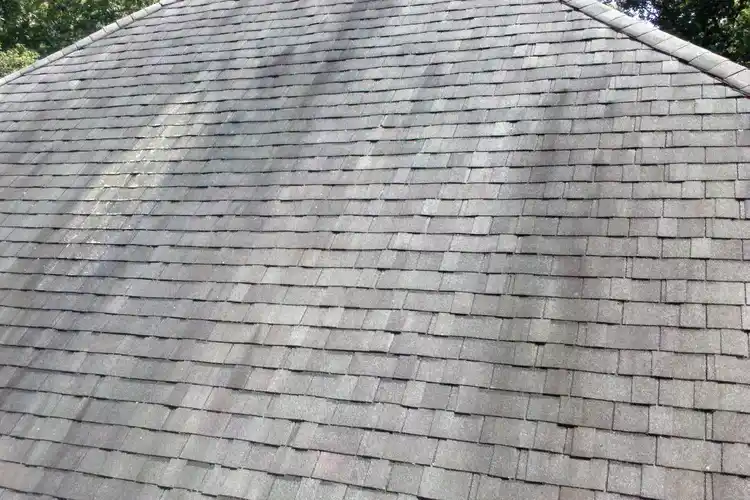
If you’ve noticed dark black streaks running down your roof, your first thought may be that the shingles are dirty, stained, or beginning to deteriorate.
In most cases, however, those streaks are caused by something much more specific: algae growing on the roof.
It is extremely common on asphalt shingle roofs, particularly in areas where moisture, shade, trees, and humidity create favorable growing conditions. Minnesota provides plenty of those conditions during portions of the year.
The good news is that black streaks do not automatically mean you need a new roof. But they can tell you something about the condition and environment of your roofing system.
What Causes Black Streaks on Asphalt Shingles?
The dark streaking commonly seen on asphalt roofs is usually associated with a type of blue-green algae known as Gloeocapsa magma.
The algae can spread through airborne spores and establish itself on roofing materials. Once it begins growing, rainwater carries it downward across the roof, creating the vertical streaks homeowners notice from the ground.
It tends to be most noticeable on lighter-colored roofs because the dark discoloration creates greater contrast.
North-facing sections of a roof may also show more staining because they typically receive less direct sunlight and remain damp longer after rain, snow, or morning dew.
Why Does Algae Like Asphalt Shingles?
Modern asphalt shingles commonly contain limestone filler.
That limestone can provide nutrients that help support algae growth. Add moisture and shade, and the roof can become an attractive environment for algae.
Trees growing near the house can make the problem worse by shading the roof and slowing evaporation. Leaves, needles, and other organic debris can also trap moisture against the roofing surface.
That is why one portion of a roof may develop heavy black streaking while another section of the same roof remains relatively clean.
Are Black Roof Streaks Mold?
Usually not.
Homeowners frequently describe black roof streaks as mold or mildew, but algae is generally the more common culprit on asphalt shingles.
Moss and lichen can also grow on roofing materials, although they tend to look considerably different. Moss often forms thicker green growth, while lichen may appear as crusty or patchy spots attached to the shingles.
Those types of growth can create different roofing concerns than simple algae staining.
Do Black Streaks Damage the Roof?
Algae staining itself is often more of a cosmetic issue than an immediate roofing failure.
That does not mean it should automatically be ignored.
Heavy biological growth can keep portions of the roof damp longer, and a roof covered with algae may also be an older roof that is already experiencing other forms of deterioration.
The important thing is to determine whether you’re looking at simple staining or signs of a larger roofing problem.
Look Beyond the Streaks
If the roof has developed black streaks, it is a good opportunity to look at its overall condition.
Watch for other warning signs such as:
- Missing or damaged shingles
- Shingles that are curling or cracking
- Large amounts of granules collecting in gutters
- Bare or shiny areas on shingles
- Moss or lichen growing between shingles
- Damaged or deteriorated flashing
- Water stains inside the attic or home
- Visible sagging or uneven areas of the roof
If several of these symptoms appear along with heavy staining, the issue may be less about cleaning the roof and more about determining how much useful life the roofing system has left.
Can Black Roof Streaks Be Cleaned?
In many cases, yes.
There are professional roof-cleaning methods designed specifically to remove algae and staining without damaging asphalt shingles.
However, homeowners should be careful about aggressive cleaning.
A pressure washer should generally not be used on asphalt shingles. High-pressure water can remove protective granules, damage shingles, and potentially force water beneath the roofing material.
Walking unnecessarily on an older roof can also cause damage, particularly when shingles have become brittle.
If the roof is otherwise in good condition, a professional cleaning may significantly improve its appearance.
Will the Black Streaks Come Back?
They can.
If the roof remains shaded and damp for extended periods, algae spores can eventually recolonize the surface.
Some modern shingles are manufactured with algae-resistant features intended to reduce this problem. These often incorporate copper-containing granules or other materials that discourage algae growth.
Keeping tree branches trimmed away from the roof can also improve sunlight and airflow, helping the roofing surface dry faster.
Does a Black-Streaked Roof Need to Be Replaced?
Not simply because it has black streaks.
The age and physical condition of the shingles are far more important.
A relatively young roof with healthy shingles may only need cleaning. On the other hand, spending money cleaning a roof that is already near the end of its service life may not make much sense.
If the roof is older, heavily stained, losing granules, curling, cracking, or experiencing leaks, it is worth having an experienced roofing contractor inspect it before deciding what to do.
What About Black Streaks on Metal Roofing?
Metal roofs do not have the same limestone-containing asphalt surface that helps encourage algae growth on traditional shingles, but that does not mean a metal roof can never become dirty or stained.
Pollen, dirt, organic debris, environmental contaminants, and biological growth can accumulate on almost any exterior surface.
One advantage of properly installed metal roofing is its smooth, nonporous surface, which generally makes it much less hospitable to the heavy biological growth commonly associated with aging asphalt shingles.
For homeowners considering a roof replacement, reduced maintenance is one of several reasons metal roofing may be worth comparing with conventional shingles.
Minnesota Roofs Have a Tough Job
Minnesota roofs deal with much more than algae.
Snow, ice, freeze-thaw cycles, hail, high winds, summer heat, moisture, and ice dams can all take a toll on roofing materials over time.
That is why the appearance of a roof should always be considered along with its age, construction, and overall condition.
A stain may simply be a stain. But sometimes it is the first thing that causes a homeowner to take a closer look at a roof that has been quietly aging for years.
Not Sure What Those Black Streaks Mean?
If you’re seeing black streaks, discoloration, missing granules, damaged shingles, or other changes to your roof, Minnesota Metal Exteriors can help determine what is actually going on.
We are a local, family-owned Minnesota roofing contractor with more than 20 years of experience working with asphalt shingles, metal roofing, roof repairs, roof replacement, and storm damage throughout the Twin Cities and surrounding areas. :contentReference[oaicite:0]{index=0}
Sometimes the answer is simple maintenance. Sometimes repairs make sense. And sometimes an aging roof is telling you that replacement is approaching.
The important thing is knowing which one you’re dealing with before spending money fixing the wrong problem.