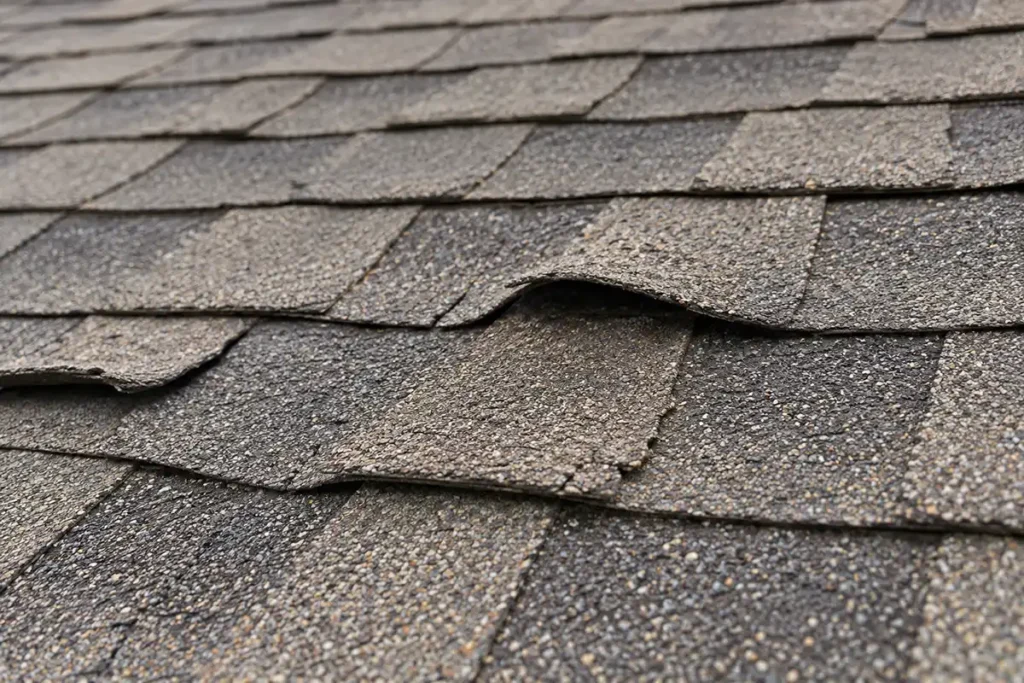
Why Are My Shingles Curling or Lifting? Does My Roof Need to Be Replaced?
If you have noticed shingles curling or lifting on your roof, it is reasonable to wonder whether you need a repair or a complete replacement. Raised edges and uneven shingles can signal that something has changed, but they do not all point to the same problem.
Some issues are limited to a small area. Others indicate that the roofing materials are deteriorating across the roof. The condition of the shingles, the cause of the movement and whether water has reached the layers beneath them all affect the answer.
For homeowners in Minneapolis, St. Paul and the surrounding communities, an inspection can help separate a repairable problem from a roof that is approaching the end of its useful life.
What Is the Difference Between Curling and Lifting Shingles?
Curling describes a change in the shape of a shingle. Its edges may turn upward, or portions of the shingle may become distorted instead of lying flat against the roof.
Lifting generally means that a shingle or its exposed edge has risen away from the surface beneath it. This can happen when wind gets beneath an edge, when the shingle has not sealed properly or when fastening or underlying roof conditions allow movement.
From the ground, these problems can look similar. A raised edge alone does not tell you whether the cause is aging, wind damage, an installation issue or movement beneath the roofing.
Why Are My Shingles Curling or Lifting?
Aging Roofing Materials
As asphalt shingles age, they can become less flexible and more vulnerable to cracking or distortion. If curling is widespread and accompanied by brittle shingles, cracks or substantial surface wear, the roof may be nearing the point where replacement makes more sense than repeated repairs.
Age is useful context, but it is not a diagnosis. Two roofs installed in the same year can weather differently depending on their materials, installation, exposure and maintenance history.
Wind Damage or an Incomplete Seal
Asphalt shingles typically include a sealant strip intended to bond overlapping shingles together. If that bond has not formed or has been broken, exposed edges may be more vulnerable to wind lifting.
Strong winds can lift, crease, tear or remove shingles. A shingle may settle back down after a storm and still have damage that is difficult to see from the ground.
If the problem appeared after windy weather, have the affected area inspected. The inspection should consider both visible damage and the condition of nearby shingles.
Installation or Fastening Problems
Shingles need to be installed and fastened according to the requirements for the specific product. Incorrect nail placement, improperly driven nails or other installation errors can affect how securely the shingles remain in place.
Roofing installed during cold weather may also need suitable conditions or manufacturer-approved procedures to establish the intended seal. A relatively new roof with raised shingles deserves evaluation rather than an assumption that it has simply worn out.
Problems With the Roof Deck or Underlying Layers
Not every uneven area originates in the shingles. Movement, deterioration or irregularities in the roof deck can affect the surface above it. Existing roofing layers and the way the roof was prepared can also influence how a new shingle installation lies.
A visible ridge or wave across several shingles may need a different repair from a single wind-lifted tab. An inspection should determine whether the roofing material or the structure beneath it is responsible.
Attic Moisture and Ventilation Concerns
Attic moisture, insulation and ventilation conditions can contribute to broader roof problems. However, curling shingles alone do not prove that ventilation is the cause.
If there are signs of condensation, damp insulation or roof-deck deterioration, those conditions should be investigated along with the exterior roofing. Replacing shingles without addressing an underlying moisture problem may leave part of the issue unresolved.
How Minnesota Weather Can Affect Your Roof
Twin Cities roofs experience summer sun, wind-driven rain, snow and changing temperatures throughout the year. Those conditions make the quality of the roofing installation and the condition of its components important.
A roof that has weathered for years may first draw your attention after a storm exposes an existing weakness. Likewise, a localized wind event may damage part of an otherwise serviceable roof.
The timing and location of the problem provide useful clues. Let your contractor know when you first noticed the raised shingles and whether there was recent severe weather.
Do Curling Shingles Mean the Roof Is Leaking?
Not necessarily. A raised or distorted shingle is a reason to investigate, but it does not confirm that water has entered the house.
At the same time, the absence of a ceiling stain does not establish that everything beneath the shingles is dry. Water may affect concealed roof components before it becomes visible inside.
Watch for additional signs such as:
- New water stains on ceilings or walls.
- Drips or damp areas in the attic.
- Missing, torn or visibly creased shingles.
- Exposed portions of the roof beneath the shingles.
- A sagging roofline or other noticeable changes in the roof surface.
If water is actively entering the home, arrange prompt professional attention. Protect belongings inside where you can safely do so.
When Can Curling or Lifted Shingles Be Repaired?
A repair may be appropriate when the damage is localized and the surrounding roof remains in serviceable condition. For example, a small area of wind-damaged shingles may be replaceable without replacing the entire roof.
The contractor should also identify why the shingles moved. Replacing damaged shingles may resolve a limited storm issue, while an installation or decking problem may require additional work.
Repair options depend partly on whether nearby shingles can be handled without breaking and whether suitable replacement materials are available. An older, brittle roof can make a small repair more difficult than it initially appears.
Ask what the proposed repair addresses and whether there are concerns elsewhere on the roof. A useful recommendation should explain the expected benefit and the limitations of the work.
When Does Roof Replacement Make More Sense?
Replacement deserves closer consideration when deterioration is widespread or repairs would leave substantial problems unresolved.
Factors that may support replacement include:
- Curling, cracking or other deterioration across large portions of the roof.
- Shingles that are too brittle to repair reliably.
- Recurring leaks or repeated repairs in different areas.
- Extensive installation problems.
- Underlying damage that requires significant removal of roofing.
- An overall roof condition that makes another limited repair a poor investment.
No single item automatically means you need a new roof. The decision should be based on the condition of the complete roofing system and the practical value of the available repair.
Should You Push the Shingles Down or Add Roofing Cement?
A raised shingle can look like a simple fix, but pushing it down or applying roofing cement does not establish what caused the problem. Aging shingles may crack when handled, and an unsuitable repair can leave damage or fastening issues concealed.
Some conditions can be addressed with manufacturer-approved sealing or repair procedures. Others require replacement of the affected material. Have the condition evaluated before deciding which approach is appropriate.
You can document visible changes with photos taken safely from the ground. There is no need to climb onto the roof to gather information for an initial conversation.
Would a Metal Roof Be Worth Considering?
If your asphalt roof needs replacement, it is a good time to compare roofing options. A metal roof uses a different roofing system, so it does not experience asphalt-shingle curling.
That does not eliminate the need for proper design, installation and attention to roof details. The panel system, fastening method, flashing and provisions for movement all matter.
Minnesota Metal Exteriors can help you compare a metal roof with your other replacement options, including appearance, maintenance considerations and the work needed for your particular home.
The right choice should fit the house and your longer-term plans, rather than simply replace one visible problem with a different material.
What Should You Ask During a Roof Inspection?
A roof inspection should give you a clear explanation of what is happening and what your options are. Helpful questions include:
- Is the problem limited to a few shingles or spread across the roof?
- Does it appear related to aging, wind, installation or the roof deck?
- Is there evidence of water reaching the underlying components?
- Can the affected area be repaired without damaging nearby shingles?
- What would a repair resolve, and what concerns would remain?
- If replacement is recommended, what findings support that recommendation?
Ask for photos of the conditions being discussed. Seeing the affected areas can make the reasoning behind a repair or replacement recommendation easier to understand.
Get Your Roof Evaluated by Minnesota Metal Exteriors
Shingles curling or lifting should be checked, but they do not automatically mean your entire roof needs to be replaced. Finding the cause and understanding the overall condition of the roof are the first steps.
Minnesota Metal Exteriors serves homeowners throughout the Twin Cities, Greater Metro and North Central Minnesota. Owner William Anderson has worked as a roofing contractor since 1999 and can help you understand your repair and replacement options.
Concerned about raised, curled or damaged shingles? Call (612) 490-6498 or visit Minnesota Metal Exteriors to discuss your roof.