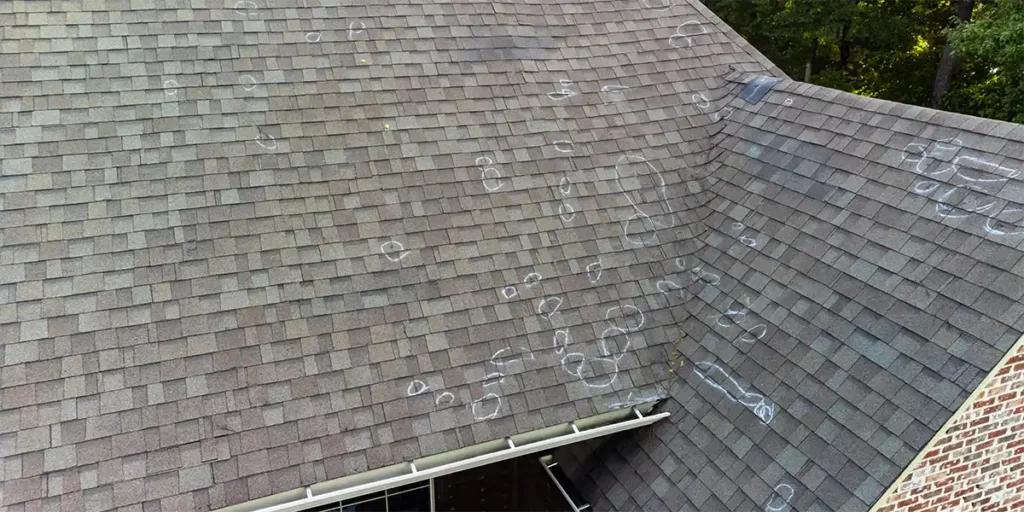
The Minnesota Homeowner’s Guide to Hail Damage, Roof Inspections and Insurance Claims
Severe thunderstorms are nothing unusual in Minnesota. Unfortunately, neither is hail.
When a hailstorm moves through your neighborhood, figuring out what to do afterward can be confusing. Your roof may look perfectly normal from the ground. A roofing contractor may knock on your door the next morning. Your neighbors may already be filing insurance claims. Before long, you’re wondering whether you should be doing the same thing.
Our advice is simple: don’t start with an insurance claim. Start by finding out whether your home actually sustained damage.
A professional roof inspection can help determine whether hail damaged your roofing system, how significant that damage is, and whether an insurance claim is worth considering.
This guide explains what Minnesota homeowners should know about hail damage, roof inspections, storm damage contractors, and the insurance claim process.
Can Hail Really Damage a Roof?
Absolutely. But not every hailstorm damages every roof.
The potential for damage depends on several factors, including:
- The size of the hailstones
- The speed and direction of the wind
- The duration of the storm
- The roofing material
- The age and condition of the roof
- The angle and orientation of individual roof slopes
- Whether surrounding trees or structures provided protection
Two homes sitting next to each other can experience different levels of damage during the same storm. Even different slopes on the same house may show dramatically different results.
That’s one reason a report of large hail in your neighborhood does not automatically mean your roof needs replacement.
What Does Hail Damage Look Like on Asphalt Shingles?
Hail damage to asphalt shingles isn’t always obvious from the ground.
Depending on the severity of the storm, an experienced roof inspector may find signs such as:
- Areas where protective granules have been knocked away
- Dark impact marks or bruising
- Cracks in the shingle surface
- Exposed asphalt
- Damage to shingle edges
- Damage to ridge and hip shingles
The important distinction is between actual hail impact damage and normal wear.
Asphalt shingles naturally lose some granules as they age. Foot traffic, tree branches, manufacturing characteristics, blistering, weather exposure, and ordinary deterioration can also leave marks on a roof.
A proper inspection should distinguish between storm-related damage and conditions that existed before the storm.
Why Missing Granules Matter
The granules covering an asphalt shingle aren’t merely decorative.
They help protect the underlying asphalt from ultraviolet exposure and weather. When hail knocks away a significant concentration of granules, the underlying material can become more exposed to sunlight and deterioration.
Severe impacts can do more than remove granules. They may damage the shingle mat or create fractures that affect the shingle’s ability to protect the roof over time.
This is why hail damage can be significant even when the roof isn’t leaking immediately after the storm.
Does a Roof Have to Leak to Have Hail Damage?
No.
This is one of the most common misconceptions about storm damage.
A roof can sustain legitimate hail damage without allowing water into the house immediately. Damage to shingles may shorten their remaining service life or compromise their ability to withstand future weather long before an interior leak becomes visible.
Waiting for water to appear on the ceiling isn’t a good way to determine whether a roof survived a hailstorm.
What Does Hail Damage Look Like on a Metal Roof?
Metal roofing behaves differently than asphalt shingles when struck by hail.
Depending on the roofing system, metal thickness, hail size, and severity of the storm, hail may cause cosmetic denting without compromising the roof’s ability to shed water.
More severe storms can potentially damage seams, flashing, penetrations, coatings, or other components of the roofing system.
That distinction between cosmetic damage and functional damage can become particularly important when evaluating a metal roof and discussing coverage with an insurance company.
A metal roof should therefore be inspected as a complete roofing system rather than judged solely by whether dents are visible.
Check More Than the Roof After a Hailstorm
You can often find clues about the severity of a hailstorm without climbing onto your roof.
Walk around the property and look for damage to:
- Gutters and downspouts
- Metal flashing
- Siding
- Window screens
- Exterior trim
- Decks and railings
- Air-conditioning equipment
- Vehicles
- Outdoor furniture
If hail dented gutters, damaged screens, marked siding, or damaged vehicles sitting outside, having the roof inspected is reasonable even if you can’t see anything wrong from the ground.
Should I Climb Onto My Roof to Look for Hail Damage?
We don’t recommend it.
Roofing surfaces can be slippery, steep, wet, or damaged after a storm. Walking on shingles can also create additional damage, particularly on an older roof.
More importantly, many forms of hail damage are difficult for an untrained homeowner to identify anyway.
Take photographs of anything you can safely document from the ground and leave the roof itself to someone equipped to inspect it safely.
When Should I Have My Roof Inspected After a Hailstorm?
If significant hail was reported in your immediate area, it makes sense to arrange an inspection reasonably soon after the storm.
That doesn’t mean you need to panic and hire the first roofing company that appears in your driveway.
There is a major difference between getting your roof inspected and filing an insurance claim.
An inspection gives you information. An insurance claim starts a formal process with your insurer.
We generally prefer to know whether there is meaningful storm damage before recommending that a homeowner begin that process.
Should I Call My Insurance Company or a Roofer First?
In many situations, having a qualified local roofing contractor inspect the roof first can be helpful.
If the inspection finds little or no storm damage, you may discover that there is no reason to file a roof claim at all.
If significant damage is found, you will have a better understanding of what happened before speaking with your insurance company.
However, insurance policies differ, and some contain specific requirements or deadlines for reporting damage. Homeowners should review their own policy and contact their insurance carrier or agent when necessary to understand those requirements.
A roofing contractor can evaluate and document roof damage, but your insurance company determines what your policy covers.
What Happens During a Professional Hail Damage Roof Inspection?
A thorough inspection should look beyond a few obvious impact marks.
The contractor may evaluate:
- Individual roof slopes and their exposure to the storm
- Shingle condition and granule loss
- Ridge and hip shingles
- Flashing
- Roof vents
- Pipe boots and penetrations
- Gutters and downspouts
- Metal components that may show hail impacts
- Siding and other exterior components
- Signs of pre-existing wear or deterioration
Photographs are especially useful because they allow the homeowner to see conditions that may not be visible from the ground.
What If the Roofer Finds Hail Damage?
If the inspection indicates significant storm damage, the next step may be contacting your insurance company and opening a claim.
Your insurer will typically assign a claim number and may send an adjuster to inspect the property.
The adjuster’s job is to evaluate the reported damage according to the terms of your insurance policy.
Your roofing contractor may also be able to meet with the adjuster at the property. This allows both parties to look at the same areas of the roof and discuss the observed damage.
Who Decides Whether Insurance Pays for the Roof?
The insurance company does.
This is an important point because homeowners sometimes hear contractors say things such as, “We’ll get your insurance company to buy you a new roof.”
A roofing contractor cannot promise insurance coverage.
We can identify damage, document what we find, explain the condition of the roofing system, provide estimates, and work with the homeowner and insurer during the repair process.
But coverage decisions belong to the insurance carrier under the terms of the homeowner’s policy.
What Does the Insurance Adjuster Look For?
The adjuster will inspect the property for evidence consistent with the reported storm.
On an asphalt roof, this may include examining representative areas on different roof slopes for hail impacts. The adjuster may also inspect gutters, vents, flashing, siding, and other components for evidence of storm damage.
Not every mark on a roof is necessarily hail damage. Adjusters may distinguish between storm damage and conditions such as normal aging, manufacturing defects, blistering, mechanical damage, or previous wear.
That is another reason good documentation can be valuable.
What Is a Deductible?
Your deductible is the portion of a covered loss that you are responsible for paying.
For example, if an insurance company approves a covered roofing loss, the deductible specified by your policy is generally subtracted from the amount the insurer is responsible for paying.
Deductibles vary considerably. Some policies use a fixed dollar amount, while others may have wind or hail deductibles calculated as a percentage.
Before beginning a claim, homeowners should know what deductible applies to their policy.
What Are ACV and RCV?
Two terms homeowners frequently encounter during roof claims are Actual Cash Value (ACV) and Replacement Cost Value (RCV).
In simplified terms, replacement cost is associated with the cost of replacing damaged property, while actual cash value generally accounts for depreciation.
Some replacement-cost policies initially pay an amount reflecting depreciation and then make additional payment available after covered repairs are completed and properly documented.
The exact process depends on the insurance policy and claim.
Don’t assume your neighbor’s insurance settlement will work exactly like yours, even if both homes were damaged by the same storm.
Does Insurance Automatically Pay for an Entire New Roof?
No.
The extent of approved repairs depends on the damage, the roofing system, applicable requirements, and the terms of the insurance policy.
Some claims may involve replacement of an entire roofing system. Others may involve specific slopes or repairable areas.
Coverage can also be affected by policy provisions concerning matching, cosmetic damage, code upgrades, depreciation, exclusions, and other factors.
This is an area where homeowners should read the insurer’s written claim determination carefully rather than relying on assumptions.
What If the Insurance Company Says There Isn’t Enough Damage?
An insurance company’s initial determination does not prevent you from asking questions.
If your contractor documented damage that appears inconsistent with the adjuster’s findings, you can ask your insurer to explain its decision and what options are available under your policy.
Depending on the circumstances, additional documentation or another inspection may be appropriate.
The goal shouldn’t be to manufacture a claim. It should be to make sure legitimate storm damage has been accurately identified and evaluated.
Be Careful With Storm Chasers
After a major Minnesota hailstorm, roofing contractors can seem to materialize overnight.
Some may be legitimate companies. Others may have traveled hundreds of miles specifically to work the storm.
Before signing anything, find out who you’re dealing with.
Questions worth asking include:
- Is the contractor properly licensed for the work being performed?
- Does the company have an established local presence?
- How long has it been in business?
- Does it carry appropriate insurance?
- Who will perform the installation?
- Who handles warranty issues after the storm crews leave?
- Can you verify recent local projects and reviews?
- Are you being pressured to sign immediately?
A roof may last decades. The company installing it should ideally still be around if you need help later.
Don’t Let Someone Manufacture “Damage”
A reputable roof inspection should document the condition that exists. It should not create evidence.
Homeowners should be cautious of anyone who unnecessarily manipulates shingles, damages roofing materials, or attempts to turn normal wear into apparent storm damage.
If something about an inspection doesn’t feel right, get another opinion before filing a claim or signing a contract.
Don’t Sign Away Control of the Project Too Quickly
After a storm, homeowners are sometimes presented with contracts before they fully understand the extent of the damage, the insurance process, or what they are agreeing to.
Read documents before signing them.
Understand whether you’re authorizing an inspection, hiring the contractor to perform work, or agreeing to other terms.
A legitimate contractor should be willing to explain the agreement and give you an opportunity to understand it.
Should I Get Multiple Roofing Estimates?
You certainly can.
However, an insurance restoration project is somewhat different from shopping for a roof replacement that you’re paying for entirely yourself.
The most important factors often become the contractor’s experience, quality of installation, materials, documentation, communication, warranty, and ability to correctly perform the approved scope of work.
The cheapest estimate isn’t necessarily the best value, particularly when you’re dealing with one of the most important protective systems on your home.
What If My Roof Was Already Old Before the Hailstorm?
Age doesn’t necessarily mean a roof cannot sustain covered storm damage.
However, normal deterioration and storm damage are not the same thing.
An older roof may already have granule loss, cracking, curling, previous repairs, or other conditions unrelated to the recent storm.
A good inspection should identify both.
Your insurance policy and carrier ultimately determine how age, depreciation, existing conditions, and covered storm damage affect the claim.
What Should I Do Immediately After a Minnesota Hailstorm?
If a significant hailstorm has just moved through your area, keep the process simple:
- Make sure everyone is safe. Stay away from downed power lines, damaged trees, and unstable structures.
- Look around the property from the ground. Check siding, gutters, windows, vehicles, decks, and other visible surfaces.
- Take photographs. Document visible damage and, when practical, the hailstones themselves.
- Prevent additional damage when safely possible. If water is entering the home, reasonable temporary measures may be necessary.
- Arrange a professional roof inspection. Find out whether the roof actually sustained meaningful damage.
- Review your insurance policy. Know your deductible and any requirements for reporting storm damage.
- File a claim when appropriate. If significant covered damage may have occurred, contact your insurer and follow its claim procedures.
What If There Doesn’t Appear to Be Any Damage?
That’s good news.
A roof inspection doesn’t need to end with a replacement contract.
If the roof handled the storm without significant damage, you should be able to walk away knowing that.
That’s exactly why we recommend inspection before assumption.
Hail Damage and Minnesota Metal Roofs
If repeated hailstorms have you considering alternatives to asphalt shingles, metal roofing may be worth investigating when the time eventually comes to replace your roof.
Quality metal roofing systems can offer excellent durability, long service life, resistance to severe weather, and substantially different aging characteristics than conventional asphalt shingles.
Metal roofing is not indestructible, and extremely large hail can damage virtually any exterior building material. But a properly selected and installed metal roofing system can be an excellent choice for Minnesota’s demanding climate.
For homeowners replacing a storm-damaged roof, it can be a good opportunity to compare the long-term costs and benefits of asphalt shingles, metal shingles, and standing seam metal roofing rather than automatically installing exactly what was there before.
Local Experience Matters After a Minnesota Storm
Minnesota roofing systems face a combination of conditions that can be particularly demanding: hail, high winds, heavy snow, ice, freeze-thaw cycles, summer heat, and ice dams.
Repairing or replacing a roof here requires more than simply knowing how to install shingles.
It requires understanding how the entire roofing system performs in Minnesota’s climate.
Think You May Have Hail Damage?
If hail has recently hit your neighborhood, Minnesota Metal Exteriors can inspect your roof and help determine what actually happened.
We’ll look for evidence of hail and storm damage, document what we find, and explain the condition of your roof so you can make an informed decision about what to do next.
If the roof is fine, that’s useful information.
If it needs a repair, we’ll tell you.
And if there is significant storm damage that may warrant an insurance claim, you’ll know what you’re dealing with before beginning the process.
After a Minnesota hailstorm, the first question shouldn’t be, “Will insurance buy me a new roof?” It should be, “Did the storm actually damage my roof?”