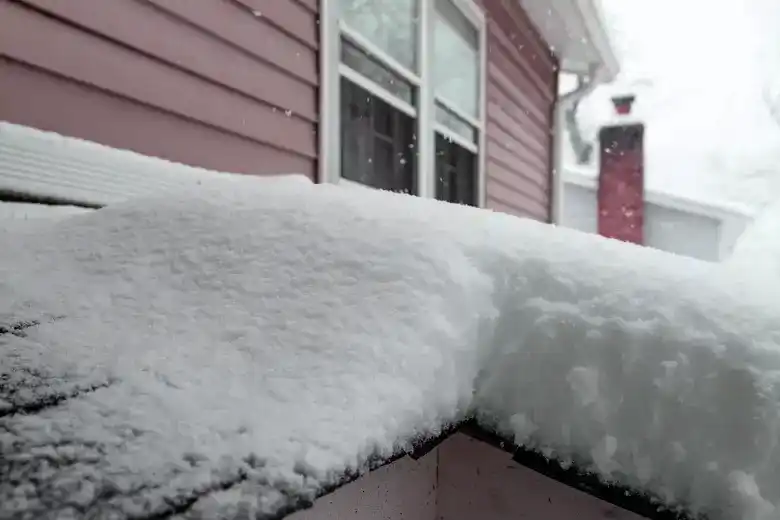
How Much Weight Is Sitting on Your Roof During a Minnesota Snowstorm?
When you look outside after a Minnesota snowstorm, a foot of fresh snow on the roof might not seem particularly threatening. It looks light. It looks fluffy. And most Minnesota homes are built with winter weather in mind.
But snow adds up quickly. Depending on how wet and dense it is, the snow sitting on an average roof can weigh thousands or even tens of thousands of pounds.
That doesn’t necessarily mean your roof is in danger. Roofs in Minnesota are designed to handle significant snow loads. But understanding Minnesota roof snow load can help you recognize when ordinary winter accumulation is becoming something worth paying attention to.
How Much Does Snow Actually Weigh?
There isn’t one simple pounds-per-inch answer because different types of snow have dramatically different weights. Light, powdery snow contains a lot of air. Wet spring snow contains much more water and can weigh several times as much.
As a general illustration, one foot of very light, dry snow may place only a few pounds per square foot on a roof. A foot of dense, wet snow can weigh 15 to 20 pounds per square foot or more. Ice is considerably heavier.
Now multiply that by the size of your roof.
Suppose a roof has 2,000 square feet of surface area and is carrying snow averaging 15 pounds per square foot. That’s approximately 30,000 pounds of snow spread across the roof.
That’s about 15 tons.
The important part isn’t that every roof with 30,000 pounds of snow is overloaded. The structure is designed to distribute loads across rafters or trusses and supporting walls. The example simply illustrates how quickly apparently harmless snow becomes an enormous amount of weight.
Fresh Powder Usually Isn’t the Biggest Concern
A big snowfall gets attention because you can see it piling up. But the more concerning situation is often what happens over the following days and weeks.
Snow settles. Temperatures rise and fall. The snow partially melts, becomes denser and freezes again. Another storm arrives and adds a fresh layer. Wind can also move snow from one portion of the roof to another.
The result can be a roof carrying several different layers:
- Older compacted snow
- Frozen or partially frozen snow
- Ice
- Fresh snow from the latest storm
- Drifted snow concentrated in particular areas
That means two roofs with the same apparent snow depth may be carrying very different amounts of weight.
Why Drifting Snow Matters
Snow doesn’t always distribute itself evenly across a roof. Minnesota winds can scour one section nearly clean while depositing a deep drift somewhere else.
Roof valleys, dormers, additions, parapets and areas where roof elevations change can collect significantly more snow than surrounding surfaces. This creates what engineers call an unbalanced or concentrated load.
In other words, total snowfall isn’t the only thing that matters. Where the snow ends up matters too.
A four-foot drift concentrated against one section of a roof may deserve more attention than a relatively uniform layer covering the entire structure.
Ice Can Be Much Heavier Than It Looks
Ice deserves special attention because water is heavy. A cubic foot of water weighs approximately 62 pounds, and solid ice isn’t far behind.
This becomes particularly important when repeated freeze-thaw cycles create thick ice accumulation or ice dams along the lower edge of a roof.
An ice dam isn’t simply extra weight. It can also prevent melting snow from draining normally. Water may back up beneath roofing materials, potentially causing leaks and damage to insulation, ceilings and walls.
How Much Snow Is Too Much for a Minnesota Roof?
There isn’t a universal snow-depth number that tells every homeowner when a roof has too much snow. Roof design, age, condition, pitch, construction, previous modifications and the density of the snow all matter.
A newer, properly engineered roof may handle a winter differently than an older structure that has experienced decades of movement, moisture or alterations. A steep metal roof may also shed snow very differently from a low-slope asphalt roof.
This is why judging Minnesota roof snow load solely by sticking a ruler into the snow isn’t particularly reliable.
Warning Signs Your Roof May Be Under Stress
Most Minnesota roofs handle ordinary winter snow without a problem. However, unusual changes inside or outside the home shouldn’t be ignored, particularly after prolonged heavy snowfall.
Potential warning signs can include:
- New sagging or unusual movement in the roofline
- Doors or windows that suddenly become difficult to open or close
- New cracks in drywall or ceilings
- Unusual popping, cracking or creaking sounds
- Visible movement in rafters or trusses
- Water stains or active leaks after snow begins melting
- Large or unusually concentrated snow drifts on one portion of the roof
If you believe a roof may actually be experiencing structural distress, don’t climb onto it to investigate. A qualified professional should evaluate the situation.
Should You Shovel Snow Off Your Roof?
Usually, climbing onto a snowy or icy roof with a shovel is a much greater immediate hazard than the snow itself. Falls, damaged roofing materials and injuries from sliding snow are all very real risks.
Roof rakes can sometimes be used from the ground to reduce accumulation near the edge of a roof, but even those need to be used carefully. Aggressive scraping can damage shingles, metal panels, flashing and other roofing components.
If snow accumulation appears unusually heavy or you’re concerned about the structure, professional snow removal is generally the safer approach.
Metal Roofing Has an Advantage in Minnesota Winters
One reason metal roofing is particularly well suited to Minnesota is its ability to shed snow. The smooth surface and steep slopes commonly used with metal roofing systems can allow accumulated snow to slide from the roof rather than remaining there throughout the winter.
That doesn’t mean snow instantly disappears from every metal roof. Roof pitch, temperature, panel style, sun exposure and snow conditions all affect how quickly snow moves.
In areas where sliding snow could land on sidewalks, entrances, decks or landscaping, snow retention systems may also be necessary to control when and how snow leaves the roof.
Your Roof Has to Survive More Than One Snowstorm
The real Minnesota roofing challenge isn’t necessarily one dramatic blizzard. It’s the entire winter.
Your roof may experience snow, wind, subzero temperatures, sunshine, melting, refreezing, ice accumulation and another round of snow, sometimes within a surprisingly short period. Those cycles can expose weaknesses that weren’t obvious during warmer weather.
That’s why roof condition matters just as much as the amount of snow sitting on top of it.
Not Sure How Your Roof Handled the Winter?
You don’t have to climb a ladder to find out.
Minnesota Metal Exteriors offers free roof inspections to help homeowners understand the condition of their roofing system. We can look for damage, wear, flashing problems, evidence of leaks and other issues that may have developed or worsened during Minnesota’s winter weather.
If you’re concerned about heavy snow, ice or how your roof is holding up, contact Minnesota Metal Exteriors to schedule a free roof inspection.
Your roof may be carrying several tons of winter right now. It’s worth knowing that everything underneath it is doing its job.